If you have been estimating residential projects and are thinking about expanding into commercial work, understanding the fundamental differences between these two disciplines is critical. We often see contractors assume that because they can build a custom home, they can easily bid on a small office complex.
The reality is that while the core principles are the same, the complexity, documentation, and pricing methods differ significantly.
In this comparison, we break down the key differences between commercial and residential construction estimating so you can approach each project type with confidence.
Scope and Complexity
Residential Estimating
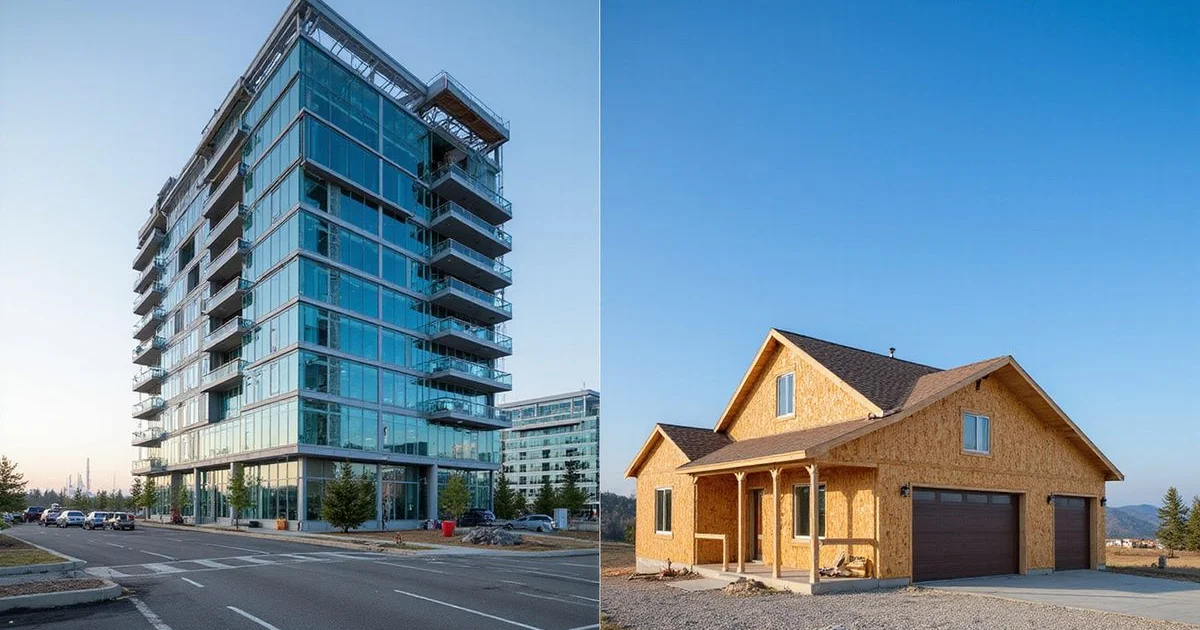
Residential projects typically involve standardized building systems that fall under Part 9 of the National Building Code of Canada (NBCC). A single-family home uses wood framing, asphalt shingles, residential HVAC equipment, and standard plumbing fixtures. The specifications are often based on builder-grade or homeowner selections from a limited menu of options.
The scope is relatively contained. One building, one owner, and one set of finishes define the project. Even custom homes follow a predictable construction sequence that experienced residential estimators can navigate efficiently.
Commercial Estimating
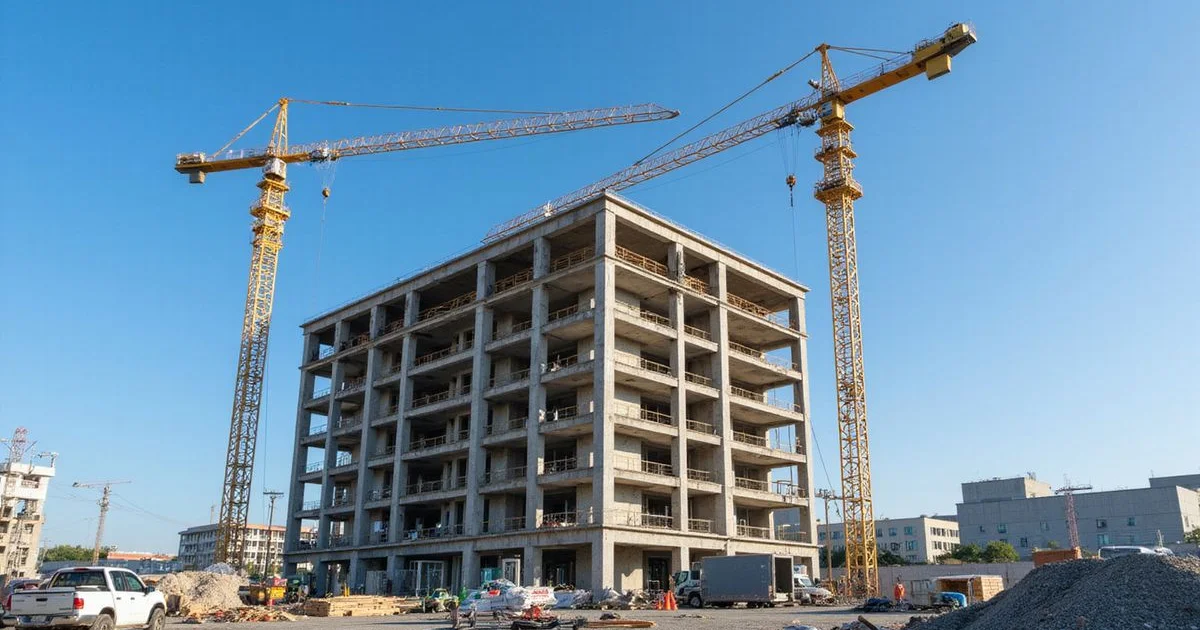
Commercial projects introduce exponentially more complexity and usually fall under NBCC Part 3, which applies to buildings exceeding 600 square metres or three storeys. A mid-rise office building might include structural steel, curtain wall glazing, commercial HVAC systems, fire suppression, and elevator systems.
The specifications are typically detailed in CSI MasterFormat divisions. You must follow specific product requirements, performance criteria, and quality standards precisely to meet code compliance.
Documentation and Specifications
One of the biggest differences between commercial and residential estimating is the volume and detail of construction documents.
Residential projects often have a relatively simple drawing set. You will typically work with architectural plans, a few structural details, and basic MEP layouts. Specifications might be a few pages of notes on the drawings or a simple schedule of finishes.
Commercial projects come with extensive drawing sets that can span hundreds of sheets. We recently worked on a mid-sized institutional project that included a full project manual with detailed specifications for every material, product, and installation method. The estimator must cross-reference drawings with these specifications to ensure every requirement is captured.
Contract Documents
- Residential: Contracts are often simpler, sometimes using generic builder agreements or CCDC 9 for large custom homes.
- Commercial: You will almost always encounter the CCDC 2 Stipulated Price Contract. On larger or more complex projects, you might see CCDC 5B (Construction Management) or CCDC 14 (Design-Build).
Pricing Methods
Residential Pricing
Residential estimates often use cost-per-square-foot benchmarks as a starting point. We then refine these with specific pricing for finishes and options. Material pricing is relatively stable, and labour rates are often based on piece-rate or lump-sum subcontractor pricing.
Commercial Pricing
Commercial estimates require line-item pricing for every material and labour component. Costs are based on current market data from sources like RSMeans Canada or Altus Group, and must account for:
- Prevailing wage requirements: These are mandatory on many public projects.
- Union labour rates: Essential in unionized markets like Toronto or Montreal.
- Bonding and insurance: Higher liability limits are standard.
- Site logistics: Cranes, hoarding, and traffic control plans add significant costs.
2026 Estimating Software Landscape
Tools also differ by sector.
- Residential: Our team often sees builders using Buildxact or Houzz Pro for their integrated takeoff and project management features.
- Commercial: Heavy hitters like Procore and STACK dominate because they handle the massive data sets and collaborative requirements of Part 3 buildings.
Labour Considerations
Labour pricing is one of the most significant differences between the two disciplines.
Residential labour is typically priced by the piece, such as per door hung or per square foot of drywall. Crews are small and move quickly through repetitive tasks.
Commercial labour must account for project-specific conditions. Productivity rates are different due to safety meetings, security clearances, and working at heights. You also need to factor in “labour burden” costs more aggressively.
Workers’ Compensation Trends (2026)
Insurance premiums are a key part of your labour burden.
- Ontario (WSIB): For 2026, the average premium rate for Class G6 (Non-Residential Construction) is set at $1.61 per $100 of insurable payroll.
- British Columbia (WorkSafeBC): We have seen a significant drop in preliminary 2026 rates for sectors like Residential Framing, which is seeing a decrease of nearly 40% due to surplus funds and improved safety records.
- Takeaway: Always check your specific rate group code (e.g., G1 vs G6 in Ontario) as the spread between residential and commercial premiums can be substantial.
Risk and Contingency
Commercial projects carry higher risk due to their complexity, regulatory requirements, and multi-party coordination. Estimators typically include higher contingency percentages for commercial work.
| Factor | Residential | Commercial |
|---|---|---|
| Contingency | 3-5% | 5-10% |
| Overhead | 10-15% | 12-20% |
| Profit (Gross) | 15-20% | 5-10% |
| General Conditions | 5-8% | 8-15% |
Note that while commercial profit margins are often lower as a percentage, the higher project values result in larger absolute dollar returns. A 5% net profit on a $10 million commercial project ($500,000) far exceeds a 15% profit on a $1 million custom home ($150,000).
Choosing the Right Estimating Approach
The key takeaway is that commercial and residential estimating are distinct disciplines that require different skill sets, tools, and databases. Estimators who excel at residential work may struggle with the complexity of commercial documentation.
Similarly, commercial estimators may over-engineer residential estimates. We have seen commercial estimators add unnecessary costs for site supervision or safety protocols that aren’t required for a standard Part 9 build.
At PRO Estimating, our team includes specialists in both commercial and residential estimating. We apply the right methodology to each project type to ensure accurate results whether you are building a custom home in Vancouver or a commercial office complex in Toronto.
Which Service Do You Need?
If you are unsure which estimating service fits your project, here is a quick guide:
- Residential estimating: Single-family homes, multi-family buildings (Part 9), remodels, additions, and renovations.
- Commercial estimating: Office buildings, retail spaces, hotels, warehouses, and mixed-use developments (Part 3).
- Industrial estimating: Factories, power plants, data centres, and process facilities.
Contact us to discuss your project, and we will recommend the right service and deliver a detailed estimate within 48-72 hours.